
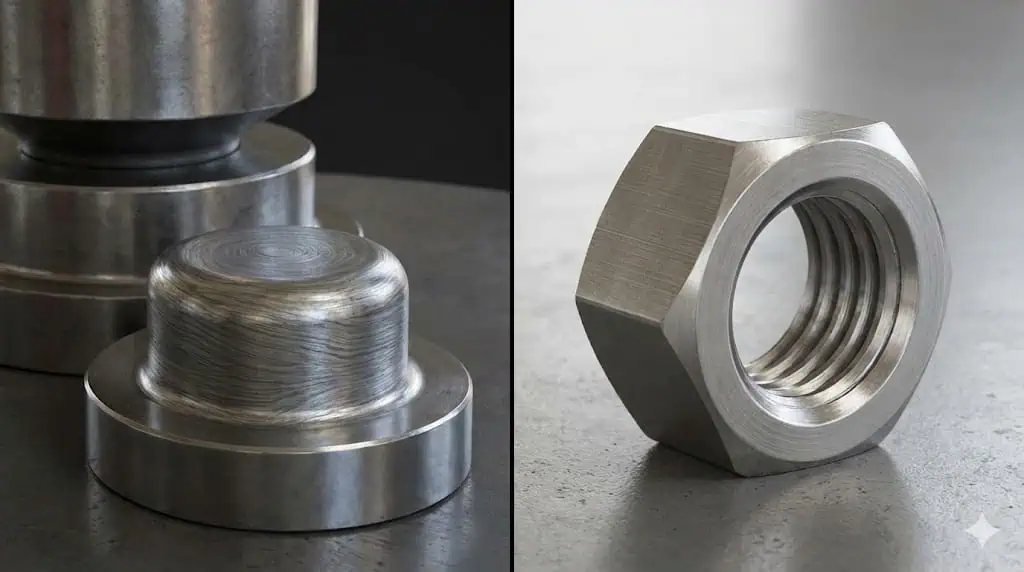
In the complex machinery that powers modern industry—from automotive assembly lines to medical device manufacturing—the most critical components are often the smallest. A single faulty screw in a braking system, a poorly threaded connector in an electrical enclosure, or an inconsistent bushing in a robotic arm can halt production, compromise safety, or lead to costly field failures. While much of the discussion around advanced manufacturing focuses on dramatic innovations like 3D printing or AI-driven design, the unsung heroes of industrial reliability remain precision-engineered threaded components.
The global market for industrial fasteners, estimated at over $100 billion annually, reflects this fundamental reality. Every sector—automotive, aerospace, electronics, energy, medical—depends on components that can maintain integrity under vibration, temperature extremes, and mechanical stress. But the real sophistication lies not in the components themselves but in the manufacturing processes that produce them consistently, at scale, with tolerances measured in microns.
The Material Factor: Why Selection Matters as Much as Geometry
Threaded components are deceptively simple. A screw, a nut, a threaded insert—these appear to be commodity items. Yet engineers specifying parts for critical applications know that material selection fundamentally determines performance. The right material must balance strength, corrosion resistance, conductivity, thermal properties, and machinability.
For electrical and electronic applications, copper and its alloys occupy a unique position. Copper’s exceptional electrical conductivity—second only to silver among common metals—makes it indispensable for grounding systems, power connectors, and battery terminals. Its thermal conductivity proves equally valuable in applications requiring heat dissipation. But copper also presents machining challenges: it work-hardens, produces long stringy chips, and requires careful tool geometry and coolant application.
This is where specialised manufacturing expertise becomes visible. Producing copper threaded components for demanding applications requires not just CNC equipment but deep process knowledge: optimal cutting speeds, specific tool coatings, chip-breaking strategies, and inspection protocols that verify both dimensional accuracy and electrical continuity. When those components must function in mission-critical systems—aircraft avionics, medical monitoring equipment, grid-scale energy storage—the margin for error vanishes.
The Tension Between Prototype Flexibility and Production Scale
One of the persistent tensions in precision manufacturing lies between the needs of product development and the realities of high-volume production. Early-stage prototypes often require rapid iteration, small batch sizes, and design flexibility. Yet the components produced during this phase must ultimately transition to manufacturing processes capable of delivering hundreds of thousands of identical parts with statistical process control.
Bridging this gap demands a manufacturing partner equipped for both worlds. The ability to produce prototype quantities with the same processes that will scale to volume production eliminates the “valley of death” where designs succeed in development but fail in manufacturing. It ensures that thread forms proven in testing remain identical in production, that surface finishes specified for performance are consistently achieved, and that material certifications trace through every batch.
For companies navigating this transition, visibility into a supplier’s full capabilities matters. The broader range of screw machine products a manufacturer can demonstrate—from simple bushings to complex multi-diameter shafts, from standard fasteners to custom-engineered inserts—signals the depth of process knowledge available. It suggests a partner who understands not just one material or one geometry but the underlying physics of chip formation, tool wear, and dimensional stability across applications.
Quality Systems: The Invisible Infrastructure
In precision manufacturing, quality cannot be inspected into a part after production; it must be embedded in the process. This principle becomes absolute when components serve critical functions. A threaded fastener that fails in a consumer product causes inconvenience. One that fails in a surgical instrument or aircraft actuator causes catastrophe.
Leading manufacturers therefore build quality into every stage: incoming material verification using spectrometry to confirm alloy composition, in-process probing that measures critical features during machining and automatically compensates for tool wear, statistical process control that tracks variation across production runs, and final inspection using coordinate measuring machines calibrated to national standards. Documentation follows each part: material certifications, inspection reports, process parameters. This infrastructure, invisible to the end user, constitutes the true value of precision manufacturing.
For procurement and engineering teams evaluating suppliers, this quality infrastructure should be a primary differentiator. Certifications like ISO 13485 for medical components or IATF 16949 for automotive applications signal that a manufacturer’s quality systems have been audited against rigorous international standards. But beyond certifications, the relevant questions concern practice: How is material traceability maintained? What percentage of parts receive 100% inspection versus sampling? How are non-conformances investigated and corrected?
The UK Manufacturing Context
For British manufacturers and engineering firms, these considerations carry particular weight. The UK’s industrial base, while smaller than in previous decades, retains deep expertise in aerospace, medical technology, motorsport, and precision engineering. Companies in these sectors compete not on price but on performance, innovation, and reliability. Their supply chain decisions reflect this positioning.
The trend toward reshoring and supply chain diversification, accelerated by recent disruptions, has prompted many UK buyers to reexamine their sourcing strategies. The calculus has shifted: lowest unit cost matters less than total cost of ownership, which includes logistics reliability, quality consistency, and the cost of failure. This creates opportunity for precision manufacturers who can demonstrate not just competitive pricing but engineering depth, quality rigor, and production scalability.
For buyers evaluating potential partners, the practical assessment involves visiting facilities, reviewing quality documentation, and discussing how the supplier handles the inevitable challenges of production: material variation, tool wear, dimensional drift. The conversation should focus not on whether problems occur but on how they are detected and resolved.
Conclusion: Precision as Partnership
The threaded components that hold together industrial machinery, medical devices, and electronic systems represent a paradox: they are ubiquitous yet invisible, simple in concept yet demanding in execution. Their reliability depends on a chain of decisions—material selection, process design, quality protocols—that extend far beyond the component itself.
For engineering and procurement professionals, the implication is clear: precision manufacturing is not a commodity to be purchased but a capability to be partnered. The manufacturers who invest in process knowledge, quality infrastructure, and engineering collaboration become not just suppliers but strategic assets. They enable the innovations that define competitive advantage—lighter aircraft, less invasive surgical tools, more efficient electric vehicles—by ensuring that the smallest components meet the highest standards.
In an industrial world where failure is not an option, precision is not a luxury. It is the baseline.

