
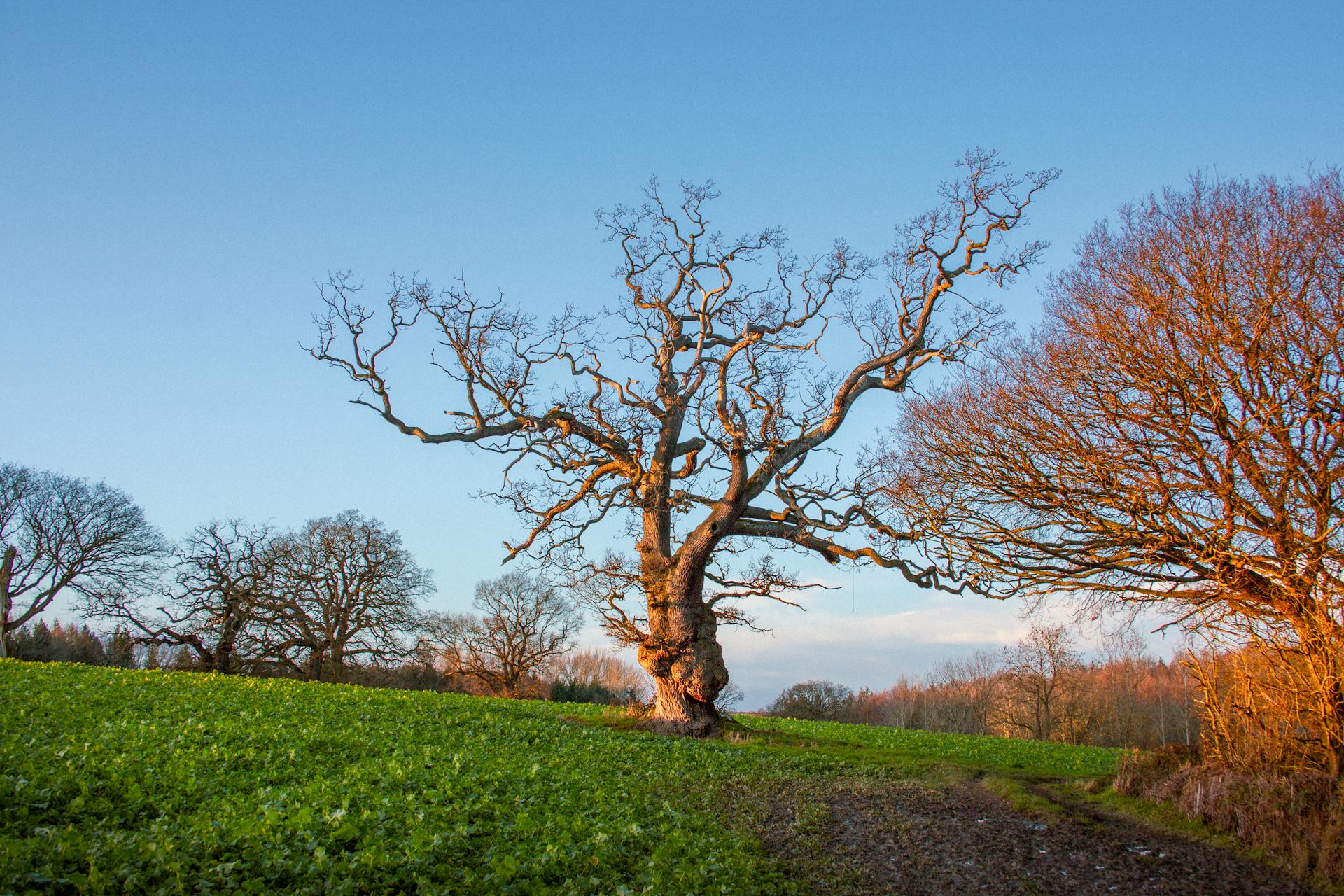
Trees add beauty, shade, and value to your property, but not every tree can remain healthy forever. Over time, disease, storm damage, pests, and age can weaken a tree, turning it into a safety hazard. Knowing the warning signs of a dangerous tree can help you prevent costly property damage and protect your family from potential accidents.
If you’re wondering whether a tree on your property should be removed, here are the most common signs to watch for.
1. The Tree Is Leaning Significantly
While some trees naturally grow at a slight angle, a sudden or increasing lean can indicate structural instability. Trees that begin leaning after storms, heavy winds, or soil erosion may have compromised root systems.
Look for:
- Fresh cracks in the soil around the base
- Exposed roots
- Sudden changes in the tree’s position
- A lean that appears more pronounced over time
A severely leaning tree may be at risk of falling and should be inspected by a professional arborist as soon as possible. Homeowners searching for reliable Tree services in Nixa, MO can benefit from having a certified tree expert evaluate potentially hazardous trees before they become a serious safety concern.
2. Large Dead Branches Are Falling
Dead or dying branches are often the first indication that a tree is struggling. Large branches that break off unexpectedly can cause injury, damage vehicles, or impact nearby structures.
Warning signs include:
- Branches without leaves during the growing season
- Brittle or hollow limbs
- Frequent branch drop
- Dead wood throughout the canopy
If a significant portion of the canopy is dead, tree removal may be the safest option.
3. Visible Decay or Hollow Areas
Trees can sometimes survive with small hollow sections, but extensive decay weakens their structural integrity.
Signs of internal decay include:
- Large cavities in the trunk
- Mushrooms growing near the base
- Soft or crumbling wood
- Peeling bark with exposed wood underneath
Because internal decay isn’t always visible from the outside, professional evaluation is often necessary to determine whether removal is needed.
4. The Tree Has Severe Storm Damage
Strong winds, lightning strikes, ice storms, and heavy snow can cause significant damage to trees.
Common storm-related issues include:
- Split trunks
- Major limb loss
- Cracked branches
- Uprooted roots
- Severe canopy damage
Some damaged trees can recover with proper pruning, but others become unstable and pose a long-term risk.
5. Root Damage Is Evident
A healthy root system is essential for tree stability. When roots are damaged by construction, excavation, disease, or soil compaction, the entire tree can become unsafe.
Signs of root problems include:
- Wilting leaves
- Sparse foliage
- Fungus growth around the base
- Soil heaving near roots
- Sudden leaning
Since roots are largely hidden underground, root damage often goes unnoticed until significant symptoms appear.
6. The Tree Is Diseased
Tree diseases can spread quickly and compromise a tree’s health beyond recovery.
Common symptoms include:
- Discolored leaves
- Premature leaf drop
- Cankers on the trunk
- Fungal growth
- Dead branches throughout the canopy
Removing a severely diseased tree may also help prevent the infection from spreading to nearby healthy trees.
7. Pest Infestations Are Taking Over
Certain insects can severely weaken trees by feeding on their bark, leaves, or internal tissues.
Watch for:
- Exit holes in the bark
- Sawdust around the trunk
- Increased woodpecker activity
- Missing bark sections
- Extensive insect presence
Pests such as emerald ash borers, bark beetles, and carpenter ants can accelerate a tree’s decline and make removal necessary.
8. The Tree Is Too Close to Structures
Even healthy trees can become problematic when growing too close to homes, garages, driveways, or utility lines.
Potential risks include:
- Branches hanging over the roof
- Root damage to foundations
- Interference with power lines
- Limited clearance around structures
In some cases, strategic pruning may solve the problem. In others, complete removal is the safest and most cost-effective solution. If you’re concerned about trees growing dangerously close to your home, contacting a professional Tree service can help determine the best course of action.
9. More Than Half the Tree Is Dead
When over 50% of a tree’s canopy is dead, recovery becomes unlikely. Trees in this condition often become brittle, unstable, and vulnerable to collapse.
Indicators include:
- Extensive dead branches
- Sparse foliage
- Large sections without growth
- Significant bark loss
A professional tree service can assess whether removal is the best course of action.
Why Professional Tree Removal Matters
Removing a hazardous tree is a complex and potentially dangerous task. Professional tree removal experts have the equipment, training, and experience needed to safely remove trees while protecting nearby structures and landscaping.
Attempting to remove a large or damaged tree without proper equipment can lead to serious injury and costly property damage.
Schedule a Tree Inspection Today
If you’ve noticed any of these warning signs, don’t wait until the next storm or strong wind event. A professional tree inspection can determine whether your tree can be saved or if removal is the safest option.
Addressing tree hazards early can help protect your home, family, and property while avoiding expensive emergency tree removal services in the future.

